Can women request a female Uber driver? Yes — as of March 9, 2026, Uber has rolled out its “Women Drivers” feature nationwide across the United States, allowing women riders to request or prefer a female driver for their trip. While this is a meaningful step forward, it comes against a deeply troubling backdrop: Uber currently faces more than 3,700 pending sexual assault lawsuits in federal court, a landmark $8.5 million jury verdict against the company, and years of suppressed internal data revealing the true scale of the crisis. For survivors and their advocates, the question is not simply whether the new feature exists — it is whether Uber has done nearly enough, and whether those harmed along the way have legal recourse.
What Is the “Women Drivers” Feature and How Does It Work?
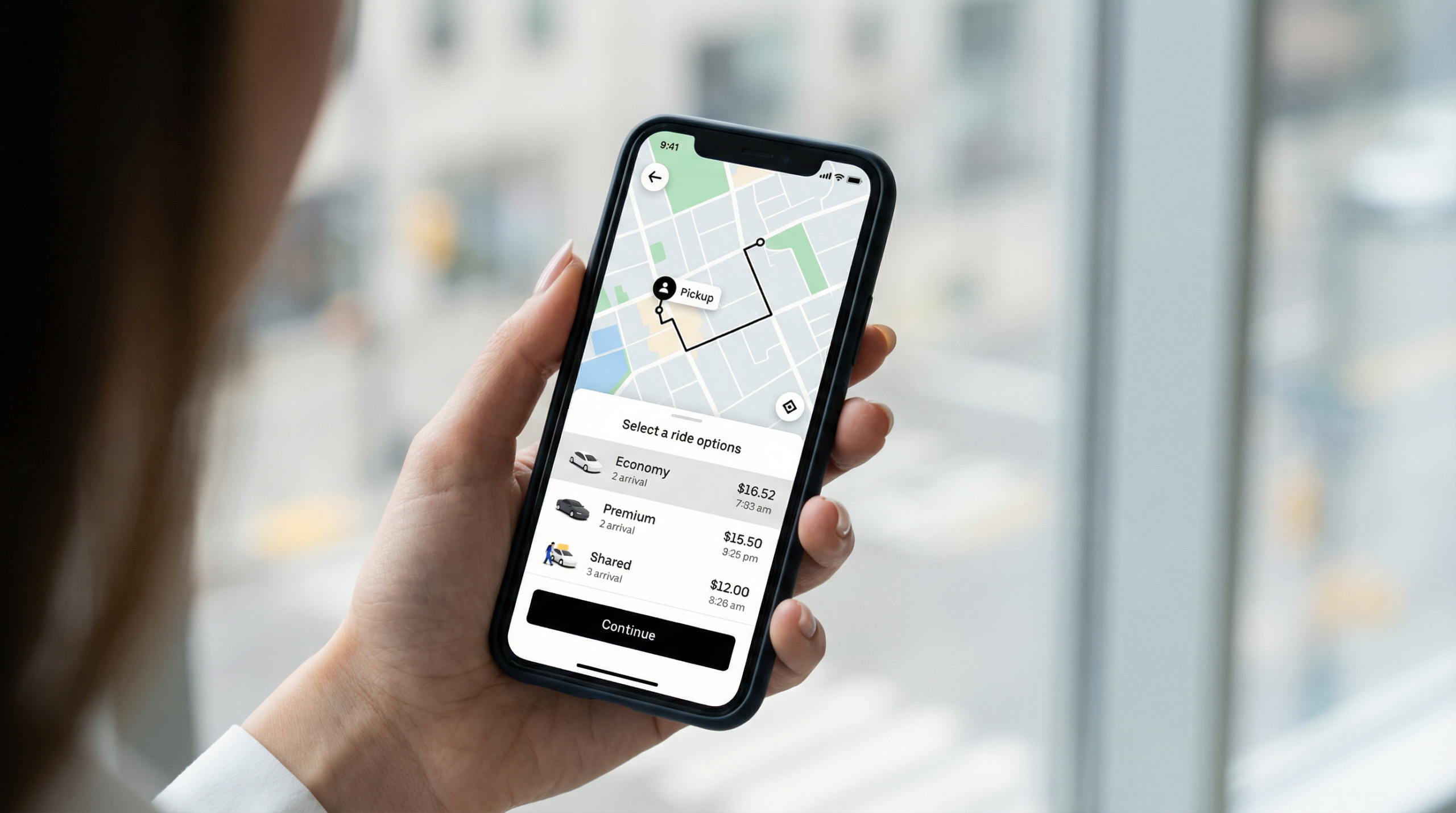
On March 9, 2026, Uber Technologies, Inc. announced the nationwide expansion of its Women Preferences program, rebranded as the “Women Drivers” booking option. [1] The feature is now available in major markets including New York City, Philadelphia, and Washington, D.C., following a pilot program launched in the summer of 2025 and a subsequent rollout to 26 additional U.S. cities in November 2025. [2]
The feature gives women riders three distinct ways to use it:
| Option | How It Works |
|---|---|
| On-Demand Request | Women riders see a “Women Drivers” option alongside UberX, Comfort, UberXL, and Black when booking a ride in real time. |
| Reserve in Advance | Riders can pre-book a trip with a woman driver through Uber Reserve for added certainty. |
| Set a Preference | Riders can toggle a standing preference in their app settings to increase the likelihood of matching with a woman driver on every trip. |
Women drivers can also opt in by toggling a “Women Rider Preference” in their driver app, enabling them to receive trip requests exclusively from women riders. Importantly, the feature is not a guarantee — it increases the probability of a match but cannot always fulfill the preference, particularly in cities where women represent a small fraction of the driver pool. [3]
Uber notes that women account for roughly one in five drivers (approximately 20%) in the United States. [4] In New York City, approximately 94% of taxi and ride-hail drivers are male, according to the city’s taxi regulator, meaning wait times for women-only rides may be longer in some markets — though Uber reports that estimated pickup times have generally remained comparable to standard UberX in urban areas. [5]
The feature is also now available to teen account holders in cities where both Teen Accounts and Women Preferences are active, responding to a top request from parents who wanted the ability to request a woman driver for their teenager. [6]
The Crisis Behind the Feature: A Systemic Pattern of Sexual Assault
Uber’s nationwide rollout of Women Drivers did not emerge in a vacuum. It is the product of years of mounting pressure, damning investigative journalism, and a wave of litigation that has exposed what advocates describe as a systemic failure to protect passengers — particularly women. If you or a loved one was harmed, our rideshare sexual assault lawyers can help you understand your legal options.
400,000 Reports in Five Years
A landmark investigation by The New York Times published in August 2025 revealed that between 2017 and 2022, Uber received a report of sexual assault or sexual misconduct approximately every eight minutes in the United States. [7] That translates to more than 400,181 reports over just five years — a figure far exceeding the 12,522 “serious” incidents Uber had publicly disclosed in its own safety reports. [8]
Uber’s own third-party US Safety Report, covering 2021 and 2022, confirmed that 5,981 incidents of sexual assault were reported on the platform during those two years alone. [10] While Uber has stated that serious sexual assault reports fell by 44% from 2017 to 2022, critics argue that the absolute numbers remain alarming and that the company’s internal data tells a far more disturbing story than its public disclosures. [11]
Who Are the Victims?
The data reveals a clear and consistent pattern. Women are the majority of victims, whether they are passengers or drivers. The vast majority of alleged perpetrators are men, whether they are behind the wheel or in the back seat. Incidents disproportionately occur during late-night rides, pickups from bars, and trips involving intoxicated passengers. [12]
The power dynamics of the rideshare environment — strangers matched by algorithms, rides conducted in isolated private vehicles — create conditions of unique vulnerability. Many assaults follow a pattern of prior misconduct complaints against the same driver that went unaddressed by Uber. [13]
The $8.5 Million Verdict: A Turning Point in Uber Litigation
The legal landscape shifted dramatically on February 5, 2026, when a federal jury in Phoenix, Arizona, ordered Uber to pay $8.5 million in compensatory damages to Jaylynn Dean, a passenger who alleged that her Uber driver raped her in November 2023 while she was returning to her hotel after a night out in Tempe. [14]
The verdict — delivered in the U.S. District Court for the District of Arizona — found Uber liable on the theory of apparent agency, meaning the jury concluded that Uber presented its drivers to the public in a manner that made passengers reasonably believe the drivers were Uber’s agents or employees, thereby creating a duty of care. The jury did not find Uber liable for negligence or design defects, and no punitive damages were awarded. [15]
“This verdict validates the thousands of survivors who have come forward at great personal risk to demand accountability against Uber for its focus on profit over passenger safety.”
— Sarah London, Attorney at Girard Sharp, representing plaintiff Jaylynn Dean [16]
Uber responded by stating that the verdict “affirms that Uber acted responsibly and has invested meaningfully in rider safety,” and announced plans to appeal. [17]
The significance of the Dean v. Uber verdict extends far beyond the $8.5 million award. It was the first bellwether trial in the massive federal multidistrict litigation (MDL) consolidating Uber sexual assault cases, and its outcome is expected to substantially influence the settlement value of all other pending cases. [18]
The MDL: Over 3,700 Cases and Counting
The Dean verdict is only the beginning. As of early March 2026, more than 3,700 Uber passenger sexual assault lawsuits from approximately 30 states have been consolidated into a single federal MDL — formally titled In re: Uber Technologies Inc., Passenger Sexual Assault Litigation (MDL No. 3084) — in the Northern District of California. [19] A second bellwether trial is scheduled for April 2026. [21]
| Metric | Figure |
|---|---|
| Total cases filed in MDL | 3,700+ |
| Pending cases (as of Jan. 2026) | 3,078 |
| States represented | ~30 |
| First bellwether verdict | $8.5M (Feb. 5, 2026) |
| Second bellwether trial | April 2026 |
| MDL court | N.D. California |
Survivors across the country allege that Uber knew about dangerous drivers, failed to act on prior complaints, conducted inadequate background checks, and misled passengers about the safety of its platform — including through the marketing of a “Safe Ride Fee” that critics characterized as a misleading representation of rider safety. [22]
Suppressed Safety Tools: What Uber Knew and When
Perhaps the most troubling aspect of the Uber sexual assault crisis is not just the volume of incidents, but the evidence that the company developed tools to reduce assaults and then chose not to deploy them.
Internal records and court documents reveal that Uber’s own data scientists and safety experts created: an algorithm to identify high-risk matches between riders and drivers based on behavioral patterns; a women-to-women matching feature (the precursor to Women Drivers) that was developed years before it was publicly launched; and mandatory in-car camera proposals that could have deterred and documented assaults.
According to reporting by the Feminist Majority Foundation and The New York Times, many of these measures were delayed, limited, or abandoned entirely. [23] Internal memos from as early as 2022 reportedly flagged “significant legal risk” under U.S. anti-discrimination laws if the women-matching feature were deployed domestically — yet the company proceeded with international rollouts in countries including Germany, France, Saudi Arabia, and more than 40 others before bringing the feature to the U.S. [24]
Critics and plaintiffs’ attorneys argue that the delay in rolling out safety tools domestically was driven not by legal uncertainty, but by business priorities — specifically, the concern that requiring cameras or extensive driver training could risk reclassifying independent contractor drivers as employees, dramatically increasing Uber’s labor costs and legal exposure. [25]
The Independent Contractor Shield: Uber’s Legal Defense
At the heart of Uber’s legal strategy in the assault litigation is its classification of drivers as independent contractors rather than employees. Under this model, Uber argues that it is merely a technology platform connecting riders with independent service providers, and therefore cannot be held vicariously liable for the misconduct of those providers. [26]
Plaintiffs and their attorneys have challenged this framework on multiple grounds:
1. Apparent Agency. As the Dean verdict demonstrated, even without an employment relationship, Uber may be liable if it presents drivers to the public in a way that creates a reasonable belief that they are Uber’s agents. The jury’s finding on apparent agency signals that this theory of liability has traction with juries. [27]
2. Common Carrier Doctrine. Plaintiffs argue that Uber functions as a common carrier — a transportation provider that holds itself out to serve the general public — which would impose a heightened duty of care to protect passengers from foreseeable harm, regardless of driver classification. [28]
3. Negligent Hiring and Retention. Even if drivers are contractors, Uber may face liability for failing to conduct adequate background checks, failing to act on prior complaints about dangerous drivers, and failing to implement available safety tools. [29]
4. Negligent Misrepresentation. The marketing of a “Safe Ride Fee” and Uber’s public safety messaging have been cited as potential misrepresentations that created a false sense of security for passengers. [30]
The Countersuit: Male Drivers Challenge the Women Drivers Feature
The rollout of the Women Drivers feature has not been without legal controversy of its own. On November 3, 2025, two nearly identical class action lawsuits were filed in San Francisco Superior Court targeting both Uber and Lyft for alleged sex-based discrimination against male drivers. [32]
In Almond and Ruud v. Uber Technologies, Inc., plaintiffs Andre Almond and Hans Ruud — both described as highly rated, long-term male Uber drivers in California — allege that Uber’s Women Preferences program unlawfully reserves access to roughly half the passenger pool (female riders) for the 20% of drivers who are women, while systematically excluding the 80% of male drivers from those matches. [33] The suit claims violations of California’s Unruh Civil Rights Act, which broadly prohibits arbitrary discrimination in business establishments, and seeks statutory damages of $4,000 per violation for a class of more than 80,000 male California Uber drivers. [34]
A parallel lawsuit, Kennedy v. Lyft, Inc., makes similar allegations against Lyft’s Women+ Connect feature. [35] The lawsuits also argue that the Women Drivers policy “reinforces the gender stereotype that men are more dangerous than women,” and that male drivers with spotless safety records are being penalized for the misconduct of a minority of bad actors. [36] Uber has filed a motion to dismiss, and the litigation is ongoing.
Lyft’s Parallel Experience: Industry-Wide Reckoning
Uber is not alone in confronting these issues. Its principal competitor, Lyft, launched its own Women+ Connect feature — allowing women and nonbinary riders and drivers to be preferentially matched — in select cities beginning in October 2023, before expanding it nationwide in February 2024. [37] Lyft, too, faces thousands of sexual assault lawsuits from passengers, and the male driver discrimination lawsuit filed against it mirrors the one filed against Uber. The parallel experiences of both companies reflect a broader industry-wide reckoning with the safety risks inherent in the rideshare model — and the legal and reputational consequences of failing to address them proactively.
What Survivors and Advocates Are Saying
For survivors and their advocates, the Women Drivers feature represents a meaningful but insufficient response to a crisis that has been building for years. The Feminist Majority Foundation has noted that Uber’s own safety experts developed the women-matching tool years before it was deployed in the U.S., and that the delay in domestic rollout prioritized corporate interests over passenger safety. [38] Advocates argue that a preference feature — which is not a guarantee and depends on the availability of women drivers in a given market — falls short of the structural reforms needed to address the root causes of rideshare sexual violence.
Survivors and their attorneys have called for: mandatory in-car cameras or audio recording in rideshare vehicles; real-time trip monitoring and enhanced RideCheck technology; stronger background check requirements, including continuous monitoring rather than periodic checks; transparent reporting of all sexual assault and misconduct incidents, not just those Uber categorizes as “serious”; and meaningful accountability for drivers with prior complaints, rather than allowing them to continue driving after reported incidents.
What This Means for Rideshare Assault Survivors: Your Legal Rights
If you or someone you know has been sexually assaulted or harassed during an Uber or Lyft ride, it is critical to understand that you have legal rights — and that Uber’s classification of its drivers as independent contractors does not automatically shield the company from liability.
The Dean v. Uber verdict demonstrates that juries are willing to hold Uber accountable under theories of apparent agency, even when the company argues it bears no responsibility for driver misconduct. With more than 3,700 cases now consolidated in federal MDL proceedings, survivors across the country are pursuing justice — and the outcomes of bellwether trials are expected to drive significant settlements in the coming months and years.
Preserve evidence. Keep all records of the trip, including the ride receipt, driver information, and any communications with Uber. If you reported the incident to Uber through the app, preserve those communications as well.
Seek medical attention. A medical examination can document injuries and preserve forensic evidence critical to any legal proceeding.
Report to law enforcement. Filing a police report creates an official record and is an important step in both criminal and civil proceedings.
Consult an experienced attorney. The legal theories applicable to rideshare assault cases — apparent agency, negligence, common carrier liability — are complex and fact-specific. Our rideshare sexual abuse lawyers can evaluate your specific circumstances, identify every viable theory of liability, and advise you on the best path forward.
Phillips & Associates: Advocates for Survivors of Sexual Violence
At Phillips & Associates, we have spent decades fighting for the rights of individuals who have been subjected to sexual harassment, sexual assault, and discrimination. With over $300 million recovered for our clients in successful settlements and verdicts, our attorneys understand the profound personal and legal challenges that survivors face — and we are committed to standing with you every step of the way.
While our practice is rooted in workplace sexual harassment and employment discrimination, we recognize that sexual violence does not stop at the office door. The same power imbalances, institutional failures, and corporate indifference that enable workplace harassment also enable the kind of systemic failures that have allowed rideshare sexual assault to persist for years.
If you have been the victim of sexual assault or harassment — whether in the workplace, during a rideshare, or in any other setting — we encourage you to contact us for a free, confidential consultation. If your assault occurred during an Uber or Lyft ride, our experienced rideshare sexual assault attorneys are ready to fight for the compensation you deserve.
Call us at 1-800-681-5000 or contact us online to speak with an attorney today.
¿Habla español? Contáctenos en español aquí para una consulta gratuita y confidencial.
Frequently Asked Questions
Can I request a female Uber driver?
Yes. As of March 9, 2026, Uber’s “Women Drivers” feature is available nationwide in the United States. Women riders can request a female driver on demand, reserve one in advance, or set a standing preference in the app. The feature is not a guarantee, as availability depends on the number of women drivers in your area.
How many sexual assault lawsuits does Uber face?
As of early March 2026, more than 3,700 sexual assault lawsuits against Uber have been consolidated into a federal multidistrict litigation (MDL) in the Northern District of California. New cases continue to be filed regularly.
Was Uber found liable for sexual assault?
Yes. On February 5, 2026, a federal jury in Arizona ordered Uber to pay $8.5 million in compensatory damages to a passenger who alleged she was raped by her Uber driver in 2023. The jury found Uber liable under a theory of apparent agency. Uber has announced plans to appeal.
Can Uber be sued for a driver’s sexual assault?
Yes, in many circumstances. Although Uber classifies its drivers as independent contractors, courts have recognized several theories under which Uber may be held liable, including apparent agency, negligent hiring and retention, and the common carrier doctrine. The outcome depends on the specific facts of each case.
What should I do if I was assaulted by an Uber driver?
Preserve all evidence of the trip, seek medical attention, report the incident to law enforcement, and consult an experienced attorney as soon as possible. Time limits (statutes of limitations) apply to civil claims, so acting promptly is important.
This article is intended for informational purposes only and does not constitute legal advice. If you believe you have a legal claim, please consult a qualified attorney.